Accepted Contributions
A list of the accepted contributions.
SE2026 continues the successful format of the last few years for its Scientific Program. All talks constitute significant contributions to research that were accepted or published within the last two years at renowned international conferences or leading journals on software engineering.
The goal of the Scientific Program is to stimulate scientific discourse within the German-speaking software engineering community and to increase the impact of already published work and findings.
The Scientific Program takes place from Wednesday, 25 – Friday, 27 February 2026 in the Wankdorf Stadium.
Location: Wankdorf Stadium
Room: Champions Lounge (Reception Area) (3rd Floor)
Room: Champions Lounge
Link: Scientific Program (SE)
Speaker: Timo Kehrer (University of Bern (CH))
Room: Champions Lounge
Link: Scientific Keynote: Maria Christakis
Speaker:
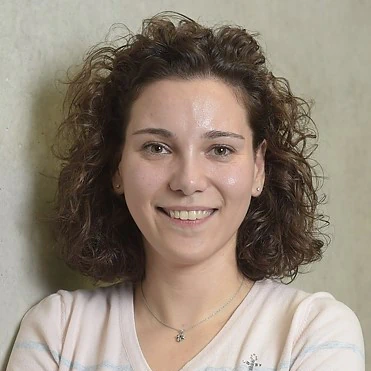
Maria Christakis (TU Vienna (AT))
Session Chair: Leen Lambers (BTU Cottbus-Senftenberg (DE))
Room: Champions Lounge (Catering Area)
Room: Sky Lounge 1
Link: Scientific Program (SE)
Session Chair: Judith Michael (University of Regensburg (DE))
Authors: Manar Mazkatli, Martin Armbruster, David Monschein, Robert Heinrich, Anne Koziolek
Format: 17 minutes talk + 5 minutes questions
Authors: Philipp Gnoyke, Sandro Schulze, Jacob Krüger
Format: 17 minutes talk + 5 minutes questions
Authors: Raphael Straub, Sarah Stieß, Steffen Becker, Matthias Tichy
Format: 17 minutes talk + 5 minutes questions
Authors: Michael Oberlehner, Bianca Wiesmayr, Alois Zoitl
Format: 17 minutes talk + 5 minutes questions
Room: Champions Lounge
Link: Scientific Program (SE)
Session Chair: Regina Hebig (University of Rostock (DE))
Author: Yuetian Mao
Format: 17 minutes talk + 5 minutes questions
Authors: Simone Corbo, Luca Bancale, Valeria De Gennaro, Livia Lestingi, Vincenzo Scotti, Matteo Camilli
Format: 17 minutes talk + 5 minutes questions
Authors: Martin Eberlein, Jürgen Cito, Lars Grunske
Format: 17 minutes talk + 5 minutes questions
Authors: Shunhui Ji, Changrong Huang, Bin Ren, Hai Dong, Lars Grunske, Yan Xiao, Pengcheng Zhang
Format: 17 minutes talk + 5 minutes questions
Room: Sky Lounge 2
Link: Scientific Program (SE)
Session Chair: Falk Howar (TU Dortmund (DE))
Authors: Dor Ma’Ayan, Shahar Maoz, Jan Oliver Ringert
Format: 17 minutes talk + 5 minutes questions
Authors: Cedric Richter, Marek Chalupa, Marie-Christine Jakobs, Heike Wehrheim
Format: 17 minutes talk + 5 minutes questions
Authors: Paul Maximilian Bittner, Alexander Schultheiß, Benjamin Moosherr, Jeffrey Young, Leopoldo Teixeira, Eric Walkingshaw, Parisa Ataei, Thomas Thüm
Format: 17 minutes talk + 5 minutes questions
Authors: Mirko Köhler, George Zakhour, Pascal Weisenburger, Guido Salvaneschi
Format: 17 minutes talk + 5 minutes questions
Room: Champions Lounge (Catering Area)
Room: Sky Lounge 1
Link: Scientific Program (SE)
Session Chair: Ben Hermann (TU Dortmund (DE))
Authors: Alexander Schultheiß, Alexander Boll, Paul Maximilian Bittner, Sandra Greiner, Thomas Thüm, Timo Kehrer
Format: 17 minutes talk + 5 minutes questions
Authors: Elias Kuiter, Chico Sundermann, Thomas Thüm, Tobias Heß, Sebastian Krieter, Gunter Saake
Format: 17 minutes talk + 5 minutes questions
Authors: Florian Sihler, Matthias Tichy
Format: 17 minutes talk + 5 minutes questions
Authors: Sven Peldszus, Katharina Großer, Marco Konersmann, Wasja Brunotte, Maike Ahrens, Kurt Schneider, Jan Jürjens
Format: 17 minutes talk + 5 minutes questions
Room: Champions Lounge
Link: Scientific Program (SE)
Session Chair: Wilhelm Hasselbring (Kiel University (DE))
Authors: Mohamed Soliman, Jan Keim
Format: 17 minutes talk + 5 minutes questions
Authors: Dominik Fuchß, Tobias Hey, Jan Keim, Haoyu Liu, Niklas Ewald, Tobias Thirolf, Anne Koziolek
Format: 17 minutes talk + 5 minutes questions
Authors: Dominik Fuchß, Haoyu Liu, Tobias Hey, Jan Keim, Anne Koziolek
Format: 17 minutes talk + 5 minutes questions
Authors: Nils Niehues, Sebastian Hahner, Robert Heinrich
Format: 17 minutes talk + 5 minutes questions
Room: Sky Lounge 2
Link: Scientific Program (SE)
Session Chair: Lars Grunske (HU Berlin (DE))
Authors: Niklas Meißner, Paul Bredl, Sandro Speth, Steffen Becker
Format: 17 minutes talk + 5 minutes questions
Authors: Christian Rahe, Walid Maalej
Format: 17 minutes talk + 5 minutes questions
Authors: Florian Poreba, Stefan Sobernig
Format: 17 minutes talk + 5 minutes questions
Authors: Belinda Schantong, Norbert Siegmund, Janet Siegmund
Format: 17 minutes talk + 5 minutes questions
Room: Champions Lounge (Catering Area)
Room: Sky Lounge 2
Link: Scientific Program (SE)
Session Chair: Matthias Tichy (Ulm University (DE))
Authors: Sabrina Böhm, Tim Jannik Schmidt, Sebastian Krieter, Tobias Pett, Thomas Thüm, Malte Lochau
Format: 17 minutes talk + 5 minutes questions
Authors: Sandra Greiner, Alexander Schultheiß, Paul Maximilian Bittner, Thomas Thüm, Timo Kehrer
Format: 17 minutes talk + 5 minutes questions
Authors: Dominik Krupke, Ahmad Moradi, Michael Perk, Phillip Keldenich, Gabriel Gehrke, Sebastian Krieter, Thomas Thüm, Sándor P. Fekete
Format: 17 minutes talk + 5 minutes questions
Authors: Chico Sundermann, Heiko Raab, Tobias Heß, Thomas Thüm, Ina Schaefer
Format: 17 minutes talk + 5 minutes questions
Room: Champions Lounge
Link: Scientific Program (SE)
Session Chair: Guido Salvaneschi (University of St. Gallen (CH))
Authors: Marion Wiese, Kamila Serwa, Anastasia M. Besier, Ariane S. Marion-Jetten, Eva Bittner
Format: 17 minutes talk + 5 minutes questions
Authors: Tural Mammadov, Dietrich Klakow, Alexander Koller, Andreas Zeller
Format: 17 minutes talk + 5 minutes questions
Authors: Paula Muñoz, Manuel Wimmer, Javier Troya, Antonio Vallecillo
Format: 17 minutes talk + 5 minutes questions
Authors: Niccolò Puccinelli, Davide Molinelli, Noura El Moussa, Matteo Ciniselli, Mauro Pezzè
Format: 17 minutes talk + 5 minutes questions
Start: 18:00
Room: Foyer
Speakers: Christian Cachin (Professor at and Director of the Institute of Computer Science, University of Bern (CH)), Timo Kehrer (University of Bern (CH))
Start: 19:00
Room: Aula
Start: 19:30
Room: Foyer
Location: Wankdorf Stadium
Room: Champions Lounge (Reception Area) (3rd Floor)
Room: Champions Lounge
Link: Industry Day
Speaker: Matthias Stürmer (Professor at the Bern University of Applied Sciences (CH), Institute ‘Public Sector Transformation’)
Room: Champions Lounge
Link: Industry Keynote: Amandine Le Pape
Speaker:
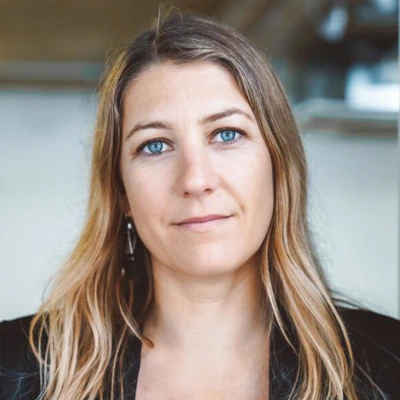
Amandine Le Pape (Head of Section – Business & Impact at the Open Source Academy, COO and Co-Founder of Element)
Session Chair: Matthias Stürmer (Professor at the Bern University of Applied Sciences (CH), Institute ‘Public Sector Transformation’)
European Digital Sovereignty is on everyone’s lips. European governments are making their intentions clear, with EU Member States signing the Declaration for European Digital Sovereignty, setting out landmark commitments to reduce Europe’s dependence on a small number of global platforms and to invest in trusted European infrastructures. Industry events have been popping up everywhere and governments are working hard to share knowledge and try to crack the problem. Open Source and Digital Commons are cornerstones of the solution, and the launch of the Digital Commons EDIC in December 2025 is a good example of the work being done.
But what is Digital Sovereignty, why is it important and why are Open Source and Digital Commons so central to it? And more importantly: What are the traps to avoid and best practices if we want to implement Digital Sovereignty successfully? Let’s pause and have a think.
Room: Champions Lounge (Catering Area)
Room: Sky Lounge 2
Link: Scientific Program (SE)
Session Chair: Malte Lochau (University of Siegen (DE))
Authors: Konstantinos Kitsios, Marco Marco Castelluccio, Alberto Bacchelli
Format: 17 minutes talk + 5 minutes questions
Authors: Ali Ebrahimi Pourasad, Walid Maalej
Format: 17 minutes talk + 5 minutes questions
Authors: Luciano Baresi, Davide Yi Xian Hu, Andrea Stocco, Paolo Tonella
Format: 17 minutes talk + 5 minutes questions
Authors: José Antonio Zamudio Amaya, Marius Smytzek, Andreas Zeller
Format: 17 minutes talk + 5 minutes questions
Room: Sky Lounge 1
Link: Scientific Program (SE)
Session Chair: Rick Rabiser (Johannes Kepler University Linz (AT))
Authors: Alexander Korn, Samuel Gorsch, Andreas Vogelsang
Format: 17 minutes talk + 5 minutes questions
Authors: Jonathan Ullrich, Matthias Koch, Andreas Vogelsang
Format: 17 minutes talk + 5 minutes questions
Authors: Christopher Lazik, Charlotte Kauter, Inês Nunes, Aaron Ziglowski, Alina Pryma, Christopher Katins, Lars Grunske, Thomas Kosch
Format: 17 minutes talk + 5 minutes questions
Authors: Nicole Hoess, Carlos Paradis, Rick Kazman, Wolfgang Mauerer
Format: 17 minutes talk + 5 minutes questions
Room: Champions Lounge (Catering Area)
Room: Sky Lounge 3
Link: Scientific Program (SE)
Session Chair: Walid Maalej (University of Hamburg (DE))
Authors: Umm E Habiba, Mohammad Kasra Habib, Justus Bogner, Jonas Fritzsch, Stefan Wagner
Format: 17 minutes talk + 5 minutes questions
Authors: Dietmar Winkler, Pirmin Urbanke, Rudolf Ramler
Format: 17 minutes talk + 5 minutes questions
Authors: Denis Neumüller, Alexander Raschke, Matthias Tichy
Format: 17 minutes talk + 5 minutes questions
Authors: Malte Hansen, Jens Bamberg, Noe Baumann, Wilhelm Hasselbring
Format: 17 minutes talk + 5 minutes questions
Room: Sky Lounge 2
Link: Scientific Program (SE)
Session Chair: Joel Greenyer (University of Kassel (DE))
Authors: Matteo Biagiola, Robert Feldt, Paolo Tonella
Format: 17 minutes talk + 5 minutes questions
Authors: Ketai Qiu, Luca Di Grazia, Leonardo Mariani, Mauro Pezzè
Format: 17 minutes talk + 5 minutes questions
Authors: Alejandra Duque-Torres, Claus Klammer, Stefan Fischer, Rudolf Ramler, Dietmar Pfahl
Format: 17 minutes talk + 5 minutes questions
Authors: Roman Haas, Raphael Nömmer, Elmar Juergens, Sven Apel
Format: 17 minutes talk + 5 minutes questions
Room: Champions Lounge (Catering Area)
Room: Sky Lounge 2
Link: Scientific Program (SE)
Session Chair: Yannic Noller (Ruhr University Bochum (DE))
Authors: Davide Molinelli, Luca Di Grazia, Alberto-Martin Lopez, Michael D. Ernst, Mauro Pezzè
Format: 17 minutes talk + 5 minutes questions
Authors: Philipp Straubinger, Tommaso Fulcini, Giacomo Garaccione, Luca Ardito, Gordon Fraser
Format: 17 minutes talk + 5 minutes questions
Authors: Tobias John, Einar Broch Johnsen, Eduard Kamburjan
Format: 17 minutes talk + 5 minutes questions
Authors: Daniel Sokolowski, David Spielmann, Guido Salvaneschi
Format: 17 minutes talk + 5 minutes questions
Location: Wankdorf Stadium
Room: Champions Lounge (Reception Area) (3rd Floor)
Room: Champions Lounge
Link: Scientific Keynote: Chunyang Chen
Speaker:
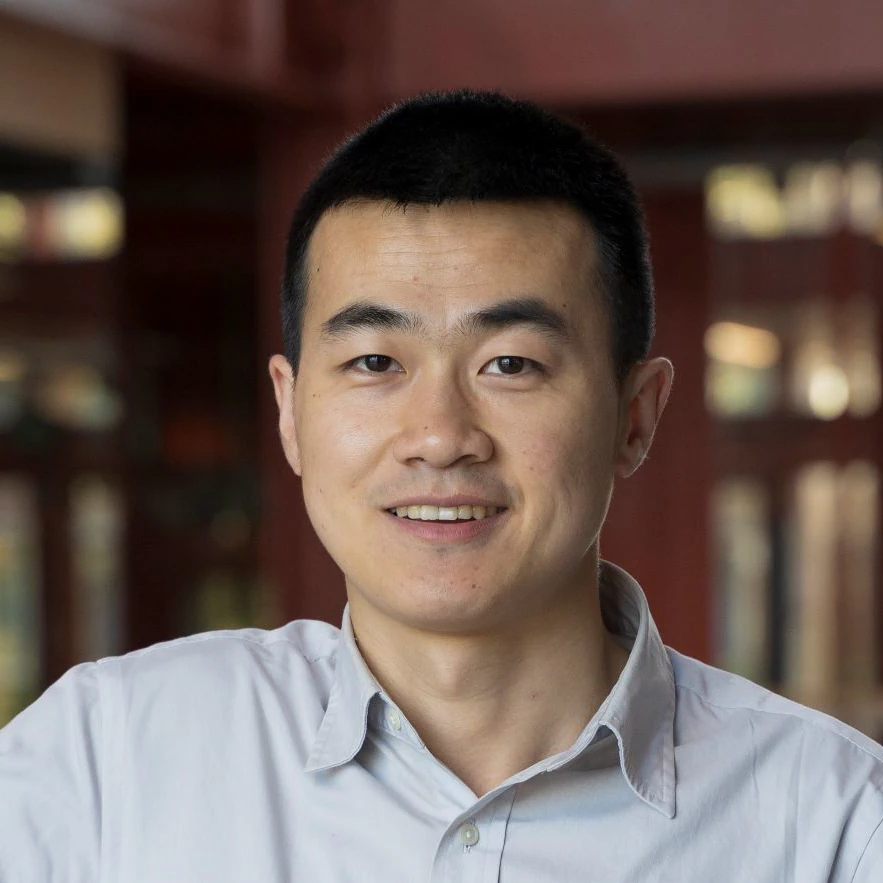
Chunyang Chen (TU Munich (DE))
Session Chair: Michael Pradel (University of Stuttgart (DE))
Room: Champions Lounge (Catering Area)
Room: Sky Lounge 2
Link: Scientific Program (SE)
Session Chair: Andreas Metzger (University of Duisburg-Essen (DE))
Author: Yanqi Su
Format: 17 minutes talk + 5 minutes questions
Authors: Jialiang Wei, Anne-Lise Courbis, Thomas Lambolais, Binbin Xu, Pierre Louis Bernard, Gerard Dray, Walid Maalej
Format: 17 minutes talk + 5 minutes questions
Author: Kai Huang
Format: 17 minutes talk + 5 minutes questions
Authors: Matteo Camilli, Raffaela Mirandola
Format: 17 minutes talk + 5 minutes questions
Room: Champions Lounge
Link: Scientific Program (SE)
Session Chair: Andrea Stocco (TU Munich (DE))
Authors: Hans-Alexander Kruse, Tim Puhlfürß, Walid Maalej
Format: 17 minutes talk + 5 minutes questions
Authors: Julian Oertel, Jil Klünder, Regina Hebig
Format: 17 minutes talk + 5 minutes questions
Authors: Pablo Valenzuela-Toledo, Chuyue Wu, Sandro Hernández, Alexander Boll, Roman Machacek, Sebastiano Panichella, Timo Kehrer
Format: 17 minutes talk + 5 minutes questions
Authors: Tim Puhlfürß, Julia Butzke, Walid Maalej
Format: 17 minutes talk + 5 minutes questions
Room: Sky Lounge 3
Link: Scientific Program (SE)
Session Chair: Dominik Helm (University of Stuttgart (DE))
Authors: Zhen Tao, Shidong Pan
Format: 17 minutes talk + 5 minutes questions
Authors: Dennis Wüppelmann, Enes Yigitbas
Format: 17 minutes talk + 5 minutes questions
Authors: Francesco Sovrano, Alberto Bacchelli
Format: 17 minutes talk + 5 minutes questions
Authors: Frederik Reiche, Ralf Reussner, Robert Heinrich
Format: 17 minutes talk + 5 minutes questions
Room: Champions Lounge
Speaker: Timo Kehrer (University of Bern (CH))
Room: Champions Lounge (Catering Area)
The Scientific Program will again consist of presentations of articles already accepted (or published) in international journals and conferences. In this way, we offer a “Best of” of the publications by research groups in the German-speaking area, which contributes to the scientific discourse and increases the visibility of these contributions.
Submissions for the Scientific Program consist of two parts, which must be combined into a single PDF using the LNI Template and submitted via EasyChair:
Summary of the contribution, with a maximum length of two pages, in LNI format (in German or English). The summary must refer to an original contribution published in a first-class international conference or journal in the field of software engineering (e.g., ASE, EMSE, FSE, ICSE, ISSTA, MODELS, TOSEM, TSE). The summary should provide a concise overview of the contribution, clearly describe its relevance to software engineering, and explain its impact on the state of the art. Additionally, the exact name of the conference or journal and the year of publication must be stated.
Only proposals for peer-reviewed technical papers that were accepted in full length at the respective main conference (or journal) and have not yet been presented at SE will be accepted. The following are not eligible for this call: short papers, invited papers, tool demonstrations, contributions to doctoral symposia, “New Idea” tracks, co-located events, workshops, or similar formats.
PDF full text of the contribution mentioned in (1.). The contribution must have been published or accepted for publication after 1 January 2024. The presenter must be a (co-)author of the contribution. They may also present the broader project context along with the research results.
The summaries of accepted contributions will be included in the purely digital conference proceedings of SE2026.
Submissions will be selected by the program committee. We use a two-stage process: First, committee members filter out submissions that are entirely unsuitable or fundamentally flawed. The remaining submissions are then evaluated based on their relevance to software engineering topics. They are ranked, among other criteria, according to the quality of the original conference or journal in which the work appeared.
To support this process, the work and related data should be openly accessible — e.g., via Zenodo, Figshare, or ArXiv. If data cannot be made available (e.g., due to confidentiality agreements or data protection concerns), a justification must be provided. Presentation slots will then be allocated according to this ranking.
A list of the accepted contributions.